|
4/13/2018 0 Comments Poetry by Nancy Iannucci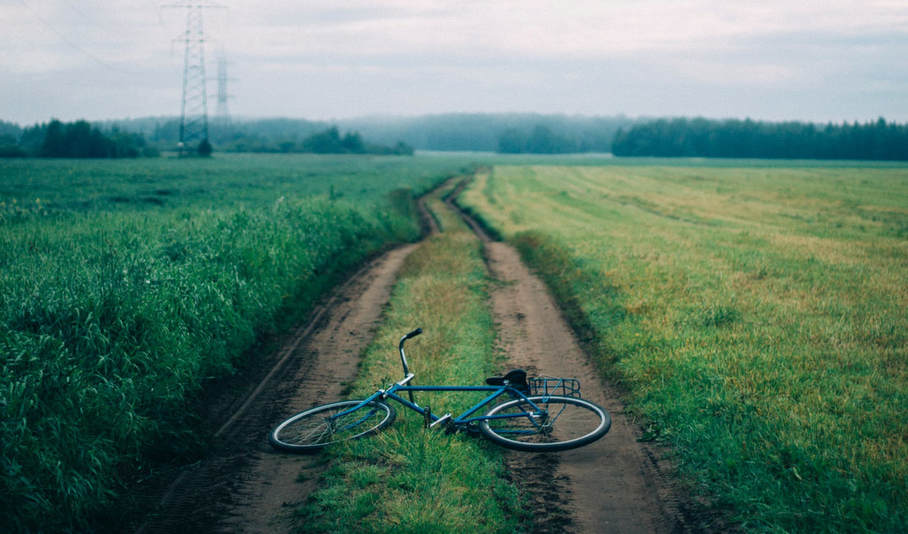 Typing… waiting to hear it from your finger lips lips on plastic chips tap dancing in your cave, my caveman, a work of parietal art, breathing in the smoky air under clouds of dense music waiting to hear it from your finger lips before I go to bed when I wake up lips on plastic chips tap dancing Typing… “I miss you, baby.” Venus Fly Trap She rolls over head down hungry, weeping in a fetal position on a sapphire comforter held together by four safety pins. He flies over doesn’t touch her he knows she wants him she can’t reach him He opens the first pin pricks her petiole soothes himself in wet forests He unlatches the second pin puts it in his mouth “sit the fuck down” she wilts & waits unfastening the third, he spirals her head, humming: “I don’t know if I love you, but I don’t know that I don’t” he watches her birds fly from the sill she rolls over, Head Up mouth open she snatches him & the fourth pin then shuts on the seventh day she opens restored & fierce her worth ruler of the Earth. Fathers I found James Dean sitting like a hobo up against my back door, pounding & pounding it in Wittenberg rapture rhythms until I invited him in. He asked me to be his Mary. I mean the one from Magdala, he said. He gave me a loose mission to shield him from flashing parasites who will come in waves of vaulting locusts, setting fields to ashes, dust to dust, who will chew his ears & legs like Giotto’s devil then spit out their spin & tweet their tweets with their fat fucking beaks about the resurrection. I won’t let them in. I can’t let them in. We need time before the world wakes. I need to know the truth about fathers & his father, Winton. Did he see him in his other fathers: Frank Stark & Adam Trask? Fathers! Your Fathers! Our Fathers! The same fathers who sat with vacant smiles posing for cheap Sears photos with little nascent rebels on their laps. Our Fathers who are or are not in heaven, driving us to drift until we crack, to drink to fatality, but Dean was the first to crash. Safe here before the storm / the arrival / we shared anecdotes about our fathers while he washed my hair clean of nard.  Bio: Nancy Byrne Iannucci is a historian who teaches history and lives poetry in Troy, NY. Her work is published/forthcoming in numerous publications including Bop Dead City, Allegro Poetry Magazine, Gargoyle, Autumn Sky Poetry Daily, Typehouse Literary Magazine, Riggwelter Press, Poetry Breakfast, Three Drops from a Cauldron, Picaroon Poetry, Dying Dahlia Review to name a few. Her debut book of poetry, Temptation of Wood, is due out in May, 2018, published by Nixes Mate Review.
0 Comments
4/5/2018 0 Comments Poetry by Kate Garrett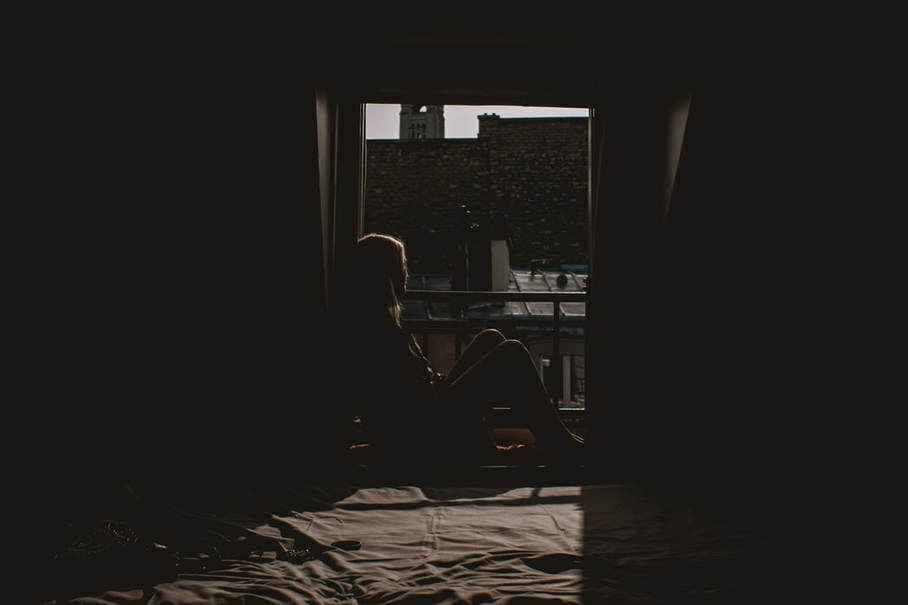 Nessus Deathbeds are hotbeds of apologies and promises, hollow as arrow shafts. It’s years since I crossed the water with him, since I gambled with the poison in his blood. This new map shows a junction and he says it means he’s sorry, but it had to happen to me. The others were practice runs, thin reminders, but I was his destiny. It means the pain will stay on for years like bad weather in a puncture wound, and it will be worth it. It means I hated loving him, but can’t change the story, though my eyes were desert dry when she told me he was dead. It means the sky thinks it knows best, leads the way—takes over while we’re staring at our feet. I’ve never seen Charing Cross sober at night Blurred from where I stood on the red bus, the shopfronts sounded like the tangle of major and minor in the intro of a song, and he said through a slur of lager that I’d been there far too long, as if city living had a sell-by date and my time was nearly up. He always made it sound like time was nearly up-- I never knew where we were going but every time it involved eating chips on the train. Once I popped into a piercing parlour in not-quite Camden: I was running low on holes and the dive bar windows reflected fluorescence, made the rain shine. Europa meets Zeus after the Peter Murphy concert She’s in the foyer laughing with her friends, in her high leather boots, iridescent skin. His is an old decadence veiled under white shirt, leather jacket, a smile positioned just right-- but his scent of tobacco and honey, slips around her, sweetest smoke in the words he speaks; she’s a goddess-- and he’s in luck: she leans closer to listen, a curve pushed through a velvet dress, warming the flesh under his sleeve. Walking together after the show she kisses his jaw with magenta lips and considers how she will convince him to carry her from here.  Bio: Kate Garrett is the managing editor of Three Drops from a Cauldron, Picaroon Poetry, and Lonesome October Lit. Her own writing appears here and there, and she is the author of several pamphlets, most recently You've never seen a doomsday like it (Indigo Dreams, 2017), and Losing interest in the sound of petrichor (The Black Light Engine Room Press, 2018). Kate was born and raised in rural southern Ohio, but moved to the UK in 1999, where she still lives in Sheffield with her husband, five children, and a sleepy cat.
www.kategarrettwrites.co.uk 4/3/2018 0 Comments Poetry by Laurinda Lind The first bad thing was the mirror falling off the van in Vermont & then seconds later the zipper splitting on my wallet, woeful signs, silver of every kind spraying down the street on the long leg of a trip taken the summer we let the fifteen- year-old leave home to live with his father, so we worried about whether the world was saying, stop right here before you slide away farther east where you will only spend yourselves in holding close around the shards. Watching behind for the boy who won’t be there. Carapace Your tendency to hurt what can't be helped the boy at the bar with the softboned hand who took you home when he read you wrong & you wrenched away & you pounded him down the black snakes that met our boat that day at the island & like G.I. Joe you firestormed the rocks with an oar to beat them flat dead in your rage that they'd gone so far past what you could allow alive in their own habitat & within you hidden & sealed something sweet & sane that wanted the sun but got stuck down deep. Your father favored soldiers. Forced Flower Lily like a lightquake shaking all the way up its throaty petals leans too late away as from some kind of father, infuriating, like a flame to a fuse. But for now a daughter's face is still a flower though it’s charred, changed from what it was while she grieves a childhood but waits for her roots to grow strong enough to catch again somewhere else out in a more remote and random soil.  Bio: Laurinda Lind lives in New York's North Country, near Canada. Some poetry acceptances/ publications have been in Barbaric Yawp, Blueline, Chautauqua, Haight Ashbury Literary Journal, Killjoy, Main Street Rag, Mudfish, Rat's Ass Review, and Triggerfish.
4/2/2018 0 Comments Poetry by Amanda DeJesus Carmen Jost CC
What You Gave Me I. The flash of my wife’s camera blinds me, the flag behind my wetback burns away – palms and laurels, leaving stars. I hold my America in my hands shaking off the memories of my mother and father land, bloodline washed clean in the saltwater between me and the Greater Antilles. II. Our twin sets of eyes meet, hers shine. I try not to see her small mouth move with need. She begs for language, for me to talk about her name or why she is wordless in two languages. She does not understand that muteness is not a gun in her mouth, tongue on the trigger. It’s the weapon I gave her. III. Five years later, my mother leaves my father behind with the dying plátano tree behind the house. She visits then, sunshines our kitchen and opens windows. She teaches her granddaughter words for pony and pacifier, but not the word for blood. She keeps this for herself, too. There is not room in our families for the words to say, “I’m sorry.” IV. I wonder at my child’s skin as she grows into being and why she is grey instead of gold. She seems to sag with shame, some weight I cannot understand that pulls her down feathers out in clumps. She fears she is too much like her mother. I turn around to find her hand clings to my shadow as she eclipses her own light. Too Much A Ghazal I remember the first time somebody called me a lush. Luxuriant plant growth; rich sensory pleasure; a drunk; all shades of lush. Four letters rush-mumbled, edged with a hint of distain And the tongue’s blade that sharpens it as it’s spat, “Lush.” A girl just aware of her waist and her hips should be full of shame at the tilt of her lips when intoxicated with feeling, with being too lush. It is far more refined to appear meek and mild, better to stave Off my heart beating blood though my veins, fueling sensations of lush. I wore a noose like a necklace, puckered my lips until I suffocated My newfound ache for teeth, spit, and scream. To exist too boldly births lush. It’s no sin to yearn; pink cheeks are courageous and red lips are brave. Do not quiet yourself when told you’re too much; revel in being so lush. My winter name sings “Noel,” my warm skin thaws their glares as I live -- and live loudly embracing the beauty of being a lush. Bio: Amanda is a student poet at the University of Central Missouri, pursuing a degree in English Literature and Creative Writing. She enjoys art of all kind and strives to support local artists in the Kansas City area. Winner of the David Baker Awards for poetry, she is excited to enter the literary world as a developing poet. 
Photography by David McClister For a songwriter, to live is to travel. On the road what we once knew best recedes from our vision, and one is flooded with the wholly new of landscape and people. Yet in the in-between aching hours of dawn and dusk, from one small town to the next, through deserts lit only by moon to the artificial pulsing of big city lights, the uncanny and the unfamiliar often become the seeds of the next song. Home may be the anchor but the road too must be traveled. Caitlin Canty is an inveterate seeker of the rugged, fearsome and beautiful earth's inner poem. Moved by rivers and floods, lightening, snow, and ecological catastrophe, the American landscape is etched hard and lasting into her soulful and articulate vision of the world around us. Through music, Canty feels her way into both the calm and the eye of the storm. Her voice too ricochets like rain against the mountain, crisscrossing grooves harshly determined by the landscape and to which she adds, as a song's responding echo; we were here, born into your wildness. Scattershot presents the ultimate human dilemma when faced with the unconquerable; to stay or to go. You might not really have a choice, to go is how you live sometimes. Storms, both in life and in nature, will force us into change one way or another. Canty's lyrics have the complex cut of poetry “Driving rain at night holds its breath under bridges / The road hisses as he slows to leave the highway / Streetlights shine on power lines / Rain hangs like diamonds / A necklace for a heavy sky on a windless night.." (River Alone) The cover to Motel Bouquet, however, speaks to a certain sweetness of life that becomes like a little piece of home that's carried around in one's heart on those long arduous hours spent weaving across the American Landscape. An anonymous gift of roses from a stranger after a show brings with it a much needed feeling that one isn't just flying by, one place to the next. A compass fed by water and carried from motel to van to the next gig. Torn between home and the road, always wanting one or the other and missing both in either place, the in-between is for Canty the muse that won't be easily satisfied. Each one of her songs bear the imprint of real struggle. To create the necessary work and weed out the unnecessary, so that the real roots in a garden aren't choked before they bloom, that task, for any artist, is a really hard place to be in. But as one listens, not just to Motel Bouquet, but to Canty's past two albums as well, what you find are well thought out, wrestled with stories of storm country, heartache, up hill battles and downhill falls, love, loss and laughter. Canty tends to ask questions more than she gives answers in her songs, which is to say that she let's truth work itself out. To catch a glimmer of what lies beneath a thing that you don't yet know the whole of, and to make the half you do, shine. AHC: One thing I'm curious to know is more about the why that led to Motel Bouquet. I tend to think that why we create something is the more important question than that of how. How we're writing so many books and creating so many songs isn't as important as why we we're doing it. I'm wondering what your take on that is. Why this album, why these songs? Caitlin: I think the why is that same mysterious reason that you might lift your camera up to take a picture of something that moves you, that you find interesting or beautiful. For me that's a song. I either want to remember it and jot it down, that moment, that snapshot in time, or I want to share it like a letter home to my mom. I think that's the impulse, the creative spark. I don't know where that spark comes from but I do know it's that same impulse every one has, not just people who base their livelihood on recording that creation and running around the country behind it. It's the same impulse we all have to pause and look at something that moves us and then ask why and tell someone else about it. AHC: This record is not accidentally called Motel Bouquets. It's very much written on the go, on the road, in motel's and in greenrooms. I'm interested to know in that constant state of travel how you cultivate a sense of home or belonging in those long stretches of time away from the familiar. How are you able to sort of anchor back to yourself, or is it easier for you to create in that state of travel than it is surrounded by the familiar. Caitlin: That's a great question. I love it. The album cover is this photo I took on the move of yellow roses. I didn't intend for it to become the defining cover of a record, I just saw something glimmer for a moment and took a picture of it. Someone had given me those flowers anonymously at one of my shows. I just threw them in a water bottle and brought them around from the van to the hotel and to the next gig. Besides it being a really pretty thing that smelled good it made me feel like I wasn't just flying by, or throwing my suitcase on the ground and zipping it up the next day. It felt like the one absolutely ridiculous extra in a life that is pretty trimmed down to the essentials. And it felt really cool to have this anonymous gift that carried a bit of brightness and sweetness. It makes it feel like less of a grind when you're able to do something so extravagant as carry around fresh flowers on tour in a van full of four guys. For me, being a touring songwriter, and not the tin pan alley or Nashville trope of the songwriter who goes to the office every day and churns out the songs, (which I also have total respect for) but that's not the way I approach it. Because I tour that's part of the process that feeds the creativity. If I were to just write songs in my own room or for someone else to sing they would be very different songs. Because I'm writing songs to sing in my own shows there's some part of the process when I start to air those songs out, like it happens often if the mic doesn't work and you have to jump out in front of it and sing a song while somebody fixes the broken cable in the middle of your show, sometimes I'll just try new material, like, if this is already a precarious moment; "here's a song I've never played before." There's something about hearing those songs as other people might hear them that helps me shape and hone them before I put them down in ink on a record. That bit of being away from home is almost vital to the way I write. I'm either at home missing the road or on the road missing home, so there's always something to be pining for and aching for and running towards, and that help's a songwriters fire, the wanting and the desire. I'm not old enough or worn out enough to feel like I've had my road years. There's a lot of musicians I've met who have been pretty worn out by that. But I am finally feeling like I have a real home. I have a garden, I have dirt and I have three trees I just got that I'm trying to put in the ground before it gets ugly again out here. I have that feeling of a place to call my own that I don't really want to leave but that desire to tour at the same time. I'm saying the same thing over and over again, but that's what songwriters do. AHC: It sounds like home feeds the spirit and the state of travel allows inspiration to trickle in more naturally, but you need both of those elements to make it work. Caitlin: Absolutely. And I love both elements too. I feel like over the years I have built so many homes away from home, found community even in places I'm only a part of for one night. When I go out to Boise I feel like I've been adopted by this family out there who come to every show and put me up. It's so much fun, and I know their kids, and that's just through music, it's not through any other connection. I want to put Boise on my calendar very soon in order to play music for Boise but also to see those folks. So there's lots of temporary homes everywhere. AHC: Music seems to be a great unifier. Things are so contentious right now, people aren't communicating with each other anymore. But there's something about music that seems to cross those lines. If I had to guess I would say that maybe forty percent of the people who were at Woodstock are now Republicans and the rest are still liberal, but they are still connected by that moment in time and probably still get chills every time that they hear those songs. Something in music is able to cut through division and hit a more universal bone. I''m wondering if you see that playing out at your shows, people unifying through the music in ways that they aren't able to outside of that? Caitlin: Being a folky singer-songwriter at my core and playing a lot of folk festivals I tend to think most of my audience aligns with my views. We're all on the same page of what kind of show they're gonna get. I don't really dive into politics at my shows because I feel like it's already a victory to have everybody get into a room together to share something without a screen and to get away from their technology. If you're at my show you're not home watching the news or a football game, not that those are horrible things, but when it's the only way that people are connecting with the world it just makes divisions deeper. People seem to be scared to leave their homes. They get on social media and read about a crime happening that they would never know about otherwise and it suddenly makes them bar the doors. With music, at least, you don't always know what to expect. It's always going to be different, you can't just queue up your program and watch it at your own leisure, you really have to get out of your own shell. I love the people who come out to my shows.They're taking a chance. Everybody can agree that there's massive division in our country and around the world right now. It feels like you can see the canyon between us and it feels like it's widening and growing, and everybody thinks everyone on the other side is crazy and their side is the only sane place to be in the world. But there's something about live music where both sides are standing at the same merch table to say how much they both love that same song. It's pretty incredible. My world view is a little different because I'm constantly travelling around the country. There's a lot about this modern world and our screens that are controlling us a lot more than before. I don't have that as much. Because I'm on tour and out there traveling a lot, it becomes a pretty great way to see America. It makes you feel a lot less disconnected. 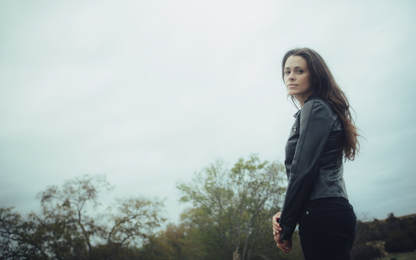
AHC: A lot of your songwriting is infused with nature, which I imagine was an early influence for you. Did you grow up in a rural area of Vermont?
Caitlin: It's been a life long appreciation for me. I didn't grow up in the country, I grew up in a town but Vermont has a lot of small towns. Our back yard spilled out into the woods and the ravine was right outside my back door. My dad was a science teacher and was always pointing out different plants and animals. I got to explore on my own and dig around in the dirt a lot as a kid. I never felt like the neighborhood was unsafe or that I had to stay indoors and play video games so the adults could keep an eye on me. I grew up with a bunch of kids in the neighborhood running around like wild animals. It was a pretty great upbringing. I lived in NYC for about ten years and I couldn't stand it, I had to get out often, which I did. The amount of concrete to nature ratio was too much for me. Living In Tennessee now I have a lot more greenery in my life. When it comes to songwriting the geography and that moment in time when you write a song is always imprinted in your own mind, but it's also coated in the songs too. This record in particular has an appreciation and awareness of nature, but there's also a real sinister side to these songs. You don't always know that's how you're feeling until it arises in what you've been writing. E.M. Forster put it best; "How do I know what I think until I see what I say." That's how I feel about the songs. You're not just programming them, they have a mind of their own. What human right now could not be feeling this strange weather we're having. The images of Houston flooding were on TV when I was mixing my song Scattershot, which is about a storm coming in and the characters in the song don't get out in time. Those images are certainly imprinted on my mind now. I definitely have an appreciation for nature and I feel so happy in it but there's also a recognition of the real sinister power of it and of not feeling safe in every situation. AHC: That song is about the natural elements but it is also about the emotional and interpersonal level of not being able to get out of something in time or make a decision to move on when that's what is best, it seems like there's a dual side to the song, Scattershot. Caitlin: Absolutely. When Kristin Andreassen and I were writing that song we were literally talking about the new Tennessee life that we have, and being in flood zones for the first time. I grew up in Vermont where there are mountains and hills so if there's a flood it's rare or it's a flash flood, but here it's something you have to deal with, along with constant tornado's. We were talking about all of this stuff but we're really good friends too and we know each other's history and there was that feeling between us that when you come through something it feels like a storm happens to you and you have a choice whether to stay or to go, whether to stand your ground or run. And that might be the only choice, it's not like you're more powerful than the storm. You have limited options. So the more personal history and the broader sense of thinking about those storms are both embedded in Scattershot. AHC: Your lyrics are very poetic and literary. Beyond the music that informs your work I'm curious to know if literature and poetry play a significant role in your creative process as well. Caitlin: Absolutely. Gretel Ehrlich who wrote a lot about Wyoming is one of my favorites. She actually got struck by lightening so she's written a lot about storms as well. She's an interesting character. I love her book, The Solace of Open Spaces so much that I gift it to my family every Christmas forgetting that I had already given it to them the year before. I read a lot of David Mccullough. I was a biology major and I didn't get my servings of history when I was in college so I find his stuff fascinating. There's this great book called Endurance by Alfred Lansing. I can't even believe it. It's a first hand account of one the most amazing, how-can-this-possibly-even-have-been-real kinda narratives of the Shackleton's journey. Reading it in winter time, reading it when you feel like you're having a hard time, you just go over this beautiful book about real leadership and courage and braving the real elements of nature and you feel like, "man, I was just complaining about shoveling the driveway, but these guys really survived." That's just riffing on the last few things I've been reading. I really want to dive into older books more though. I find this with music too, every time you put out a new record people are reminded of the last thing and they're reminded that you exist and they might go back and listen to it again. But it seems like all I ever hear about are new books, the one's that are just published, and it's such a shame because it takes me awhile to get around to finding the gems, Because once I read one I read it like four times. But you're right, a lot of my stuff is rooted in the things that I love, nature, the west, the wild, storms. AHC: I'm interested in learning about your vocal approach to a song. Jonatha Brooke once said that for a songwriter it's important to sing something the way that you would say it. If you're telling somebody you love them, for instance, when you sing it you want to dip into the same kind of emotional tone you would use in real life. Is that something you think about consciously or is that something that arises more organically for you? Caitlin: I think there's a couple of pieces to that. When you sing it like you might say it, that's great advice in that there's an underlying melody and groove to everything we would say. Very few people out there have monotone. There's something to being able to find a way to do what the words want. Putting the emphasis in a comfortable place helps get a point across. Anybody giving a great speech might also be a great songwriter because they know how to play on words and how to push them in the right moment to an audience, or which vowels open up and sound better. That's the technical part, when you're using your mind in order to try and get the message across part of singing. I can't sing a song believably unless I believe in it. Or you won't feel it if I don't feel it. I'm lucky enough that I get to perform exactly what I want. If I don't feel like singing a certain song that night I don't have to. I'm not a worn out pop star who was a one hit wonder and has to sing their hit every night and go; "not again, I have to do this again!" [Laughter] I'm writing new songs all of the time and I don't have any hits, so I get to pick whatever I want and I think that gives me the freedom to really let the feeling come across. But that said I'm a folky singer. I tend to have more of a lazy singer's approach, like I love the way Willie Nelson sings. He's almost still singing the song before when the band is kicking up the new song, he's so behind [laughter]. And I also love Emmylou Harris, she fills every single syllable with such emotion that you must feel something when she sings or you might be dead. I try not to think about it after creating the song. When I'm performing it's not like "hey, I'm up here being authentic with my denim and that means everything just pours out of my heart and not out of my head," there's definitely an aspect to performing that is preconceived, thinking of the order of your set list and the best way to move people, and how to sprinkle the fast songs into the slow songs. But once you get out there you have this beautiful time to just be with the music. It's that 45 or 75 minutes you get that's really pure and the rest of the time is spent driving to the gig or in the studio figuring out which take of which song makes the final cut, and the parts of it that are about work work work, and then you have that beautiful, pure time to stand in front of an audience that really cares to hear what you have to say. It's like, how could you not be moved by that. I'm not just aiming to make it pin drop quiet every second of the show. It's really fun to tour with a band and to kick it up and to feel the energy of the pedal steel churning through the amp and slicing through your body. You want to try and write songs that have that kind of emotion within them so that bandmates can find their way into a song. 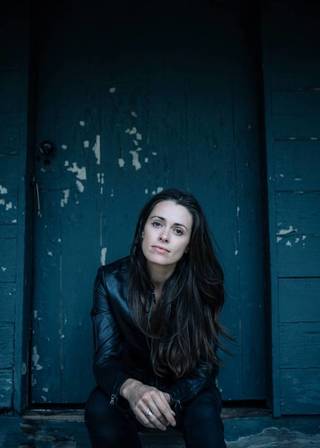
AHC: Do you bemoan at all how music is being consumed nowadays? The loss of the vessel for the product, the loss of chronology, the lyrics?
Caitlin: As a consumer I tend to want the vinyl, the CD and digital streaming so that I can access it at all times. I'm happy that there's all these formats as a consumer, but as a creator the pricing structure for downloads is troubling. It's only really well informed consumers and music lovers that understand that when you buy a ticket to a show that's a vote for another musician's survival. And when you buy a record at a show you are really putting gas in the tank. It's the vital lifeblood for a touring musician. I am a little sad that the value isn't baked into the psychical product anymore in that same way. But I can't sound too nostalgic for a time I didn't live in. I didn't grow up listening to vinyl. I listened to the radio and whatever Cd's my friends were listening to. I was not this 13 year old music explorer, I was just singing along and absorbing everything around me and playing soccer and being a kid. All I know is that I have to keep writing songs. I just have to, it's who I am. And I'm lucky that I get to do that and that I get to print up the vinyl and that I'm able to sell enough of it to print up more. What I would say is scarier than the loss of the tactile relationship with the LP is the way money moves in this industry. I feel like I'm successful because I'm able to keep doing it, but for some other songwriter's out there it's becoming harder and harder, or for the folks in bands where there's less money trickling down hill. I think the creation of music is gonna suffer if the creators can't even derive value from the products they're putting out there. And to some extent it is the loss of that vessel for the LP that is making that relationship harder. AHC: I think it's important that people buy an album at a show even if they already have it, because, like you say, it is the life blood that allows that artist to stay on the road, and being able to make up for the losses that are built into the system, sadly. Caitlin: You won't catch me crying though, because I worked for five years behind a desk and I'm so happy that I get to do this. It's not that I feel like the world has wronged me, I feel like the world has wronged my friends who've been doing this their entire lives and are getting less and less. AHC: Do you have any word of advice for other songwriters who are becoming disillusioned with the creative process? Caitlin: I've had those feelings of "maybe I just don't love it enough anymore." There are also times where you feel so inspired but you don't roll out of bed everyday with the seeds of your next song at hand. It's not that easy. The only advice I can give is to keep going and don't ever release something you're not proud of. If you don't love what you've done leave it behind and keep going. You don't have to release every little thing that you've created or record new albums at a break neck pace. Follow your gut. Look at Dolly Parton and Loretta Lynn who wrote their songs decades ago and are still singing them with their whole heart and soul. These folks didn't just record a song into the voice memo on their phone and try and make a career out of it. They've really worked these songs and still seem to love them and know how to get inside them. I think that's the ultimate goal. That, and to just keep going. Motel Bouquet can be purchased at www.caitlincanty.com/ or wherever fine records are sold. Keep up with Caitlin on Facebook, Twitter and Instagram. 4/1/2018 0 Comments Poetry by Kevin Ridgeway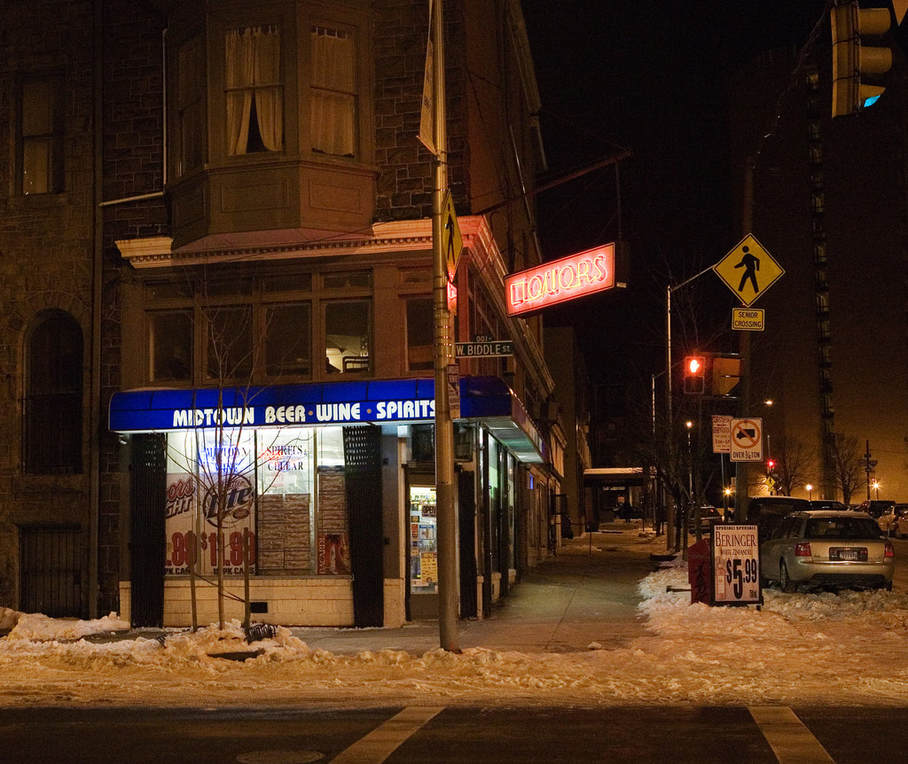 dcJohn CC
What I've Learned So Far i'm a weird guy obsessed with so many random, beautiful quirky mind-bent things i dig for and study endlessly in a lonesome tower of a vicarious life asking peculiar questions in class rooms and getting funny looks for the way I hold a fork in my trembling hand and the nervous awkward silence after she giggles at me in my skivvies for the first time before I belt out the words to The Greatest American Hero and avoid telling her that I'm a virgin for another month of slippery lies told with the shame of inexperience and useless information. Smile Until You're Alive Enough to Be Dead we sit on a curb where she tells me she's sick of it all and i think of how many times i've said that and tried to kill myself with the shit life keeps throwing at me with my mother's death, my father's third stage lung cancer, my legal troubles, being a stranger to the rest of my surviving family and being trapped in a no where, low income world of mental patients and my sad racing desperate sleepless thoughts missing out on all the good times while i look inside windows at five star hot spots where people my age smile without a care-- and i tell her i'm sick of it all enough to keep living in order to find out if i conquer any of this shit and be another of a thousand hero's faces who were all sick of it enough to get up from that curb and fight my way to the other side of that window to decide for myself if the joint has five-star cuisine or if the curb is the place to learn to smile without a care in this world as it slowly all burns away. BIO: Kevin Ridgeway lives and writes in Long Beach, CA. Recent work has appeared or is forthcoming in Slipstream, Chiron Review, Nerve Cowboy, Lummox, San Pedro River Review, The Cape Rock, Misfit Magazine and Cultural Weekly, among others. He is the author of seven chapbooks of poetry. The latest is A Ludicrous Split (co-authored alongside Gabriel Ricard) from Alien Buddha Press. |
AuthorWrite something about yourself. No need to be fancy, just an overview. Archives
April 2024
Categories |
 RSS Feed
